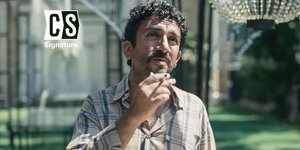
Jafar Panahi Explains ‘It Was Just an Accident’s Haunting, Oscar-Nominated Ending

He also discusses the production challenges of filming in Iran illegally and calls for solidarity with its people.

Taylor Gates is an Indiana native who earned her BFA in Creative Writing from the University of Evansville. She fell in love with entertainment by watching shows about chaotic families like Full House, The Nanny, Gilmore Girls, and The Fosters.
After college, she moved to Los Angeles to pursue a career as a writer, editor, and filmmaker. Today, she’s a sucker for dramedies — especially coming-of-age stories centering around complex female and LGBTQ+ characters. She has been with Collider since May 2022.
Iranian cinema, particularly its more underground works, is having a big moment right now. From Mohammad Rasoulof’s The Seed of the Sacred Fig being nominated for Best International Feature last year to Maryam Ataei and Hossein Keshavarz’s The Friend’s House is Here winning a Special Jury Award at Sundance this January, stories about people bravely fighting against the authoritarian regime are gaining more mainstream recognition. One of the most passionate and revered artists spearheading this movement is Jafar Panahi, who has served several months in prison for protesting the government.
His latest film, It Was Just an Accident, was shot illegally in Iran with a bare-bones cast and crew to maintain the secrecy of the risky production. A bold and deeply personal film, the story centers around a group of former political prisoners, including mechanic Vahid (Vahid Mobasseri), photographer Shiva (Mariam Afshari), her former partner Hamid (Mohammad Ali Elyasmehr), and a named bride-to-be unnamed Goli (Hadis Pakbaten), debating whether to get revenge on a man named Eghbal (Ebrahim Azizi), who they believe may have tortured them in prison. Complex questions of morality, guilt, and vengeance are raised through a tale that’s harrowing, human, and, at times, even surprisingly humorous.
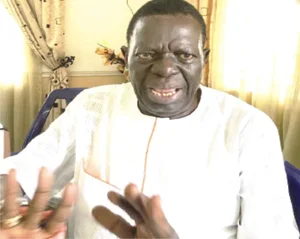
Collider had the honor of speaking with Panahi about the film, which is nominated for Best International Feature Film and Best Original Screenplay at the Oscars this year. During the conversation, Panahi discussed the unique production challenges he faced, the film’s powerful ending, the massive wave of protests going on in Iran today, and more.
Jafar Panahi Talks Being a “Social Filmmaker” and ‘It Was Just an Accident’s Commitment to Realism
“You've got to choose what kind of cinema you believe in.”

COLLIDER: I rewatched the movie to prepare for this interview, and I think I appreciated it even more the second time. Everything takes on a whole new meaning when you know what’s coming, especially in that scene with Eghbal and his family. His daughter serves such an interesting purpose in this film. I'm curious if you can talk about her role and what you wanted to represent through her.
JAFAR PANAHI: She can represent many different things, from youth to hope in the future. She shows that the generation that's on its way is a very aware generation — a generation that's not ready to accept anything with its eyes closed. She says a small sentence, which I think is really key. When they have the accident, the mother, because of her religious beliefs, says, “Maybe it was God's choice.” The daughter says, “No, you — meaning the father — hit the dog and killed him. Why are you bringing God into the equation?” This is the question, but also the form of questioning that the young generation brings forth.
We see in Iran that with every successive wave of protests and social change, it's the young generation that's always one step ahead, and it's really not ready to accept anything it's told with its eyes shut. In the recent protests, over the course of only 10 hours, 235 school children were murdered. Now, of course, these are the students — the children whose names we know. There are, for sure, many others whose names have not yet been ascertained. This shows that entire families took part together in the demonstrations — fathers, mothers, children, and so on. And this really proves how peaceful the movements and the demonstrations were, but also how progressive the children were in choosing to accompany their parents on these protests.
From that opening scene to Eghbal’s interrogation, some of the most powerful scenes in this film are those long shots where the camera stays stationary. What goes into the decision to let the camera linger like that?
PANAHI: Well, first of all, of course, you've got to choose what kind of cinema you believe in. I say I am a social filmmaker. What does it mean to be a social filmmaker? Well, it means to make films that do not divide characters into goodies and baddies, but to look at and portray every single character as a human being, to allow everyone to speak their own words, their own minds. For instance, when Eghbal is tied to the tree, I framed it in such a way that only he gets seen. Why do I do this? Because I believe that everyone should have the right to express their own opinions. I don't think that just because we think of him as a bad person, he should not have the right to express his thoughts. It's very important to find a way to maintain fairness.
Throughout the film, we see every other character speak about him, but he is absent. He's inside a box, and the box is inside a van. It's important to reverse the situation — show him absent all the others. Of course, that doesn't mean that other characters cannot enter the frame and walk by him, go and sit next to him, or talk to him, but we stay on him. It's important to respect what you could call visual justice or equality. It's the kind of cinema that you believe in that guides you and shows you how to make your own decoupage. This is where you see the difference between this sort of cinema and other ways of making films, other genres. Every single shot in the film has been chosen and reflected upon with great accuracy.
Another choice I found really effective was that you didn't include any graphic flashbacks to those characters' time in prison. Instead, you let their monologues do the work of making us feel the pain and the terror that they went through. How did you work to nail those longer monologues that you have them say?
PANAHI: In realistic films, flashbacks don't really have much of a role to play. When you begin a flashback, in a way, you’re taking the film somewhere else — it's no longer real. And yet, my film does have flashbacks in the sense that, by creating a certain atmosphere and by the use of a certain kind of dialogue, it's as if you are creating a flashback that takes place exclusively in the mind and the imagination of the audience.
I did know that dialogue would play a fundamental role in this film, so I employed the help and collaboration of someone who spent a very long time in prison — a fourth of his life — and who knew prisoners and their experiences very well, but was also absolutely impeccable when it came to their use of language, and likewise to the use of language of the interrogators. The person I'm talking about is Mehdi Mahmoudian, and I asked him to please come and rewrite all the dialogue with me. That’s why this dialogue is so accessible and resonates so strongly with the audience. Of course, I hope that the subtitles did justice to the language we worked on with such precision.
Jafar Panahi Explains ‘It Was Just an Accident’s Powerful Ending and Unique Production Challenges
“I'd like to really emphasize that the film was made possible thanks to the extreme helpfulness and collaboration of every single person involved.”

You've talked about the challenges of shooting with Ebrahim Azizi blindfolded, but I'm wondering if you could talk about the challenge of having Hadis Pakbaten in that giant wedding dress for the whole shoot. I thought that was such a fascinating costume choice.
PANAHI: Oh, yes. It was very hot while we were shooting, and that dress is quite heavy. Because we worked long hours, she had to wear it nonstop, and moreover, because we worked with a tiny cast and crew, that meant that the actors themselves had to go home and take care of their own costumes, wash them, and prepare them for the following day. So I'd like to really emphasize that the film was made possible thanks to the extreme helpfulness and collaboration of every single person involved. That meant that everyone had to double up and wear more than one hat because, were we to work with a wider group, the shoot would have become public knowledge, and the film would have been stopped.
The ending to this movie really stayed with me. I know in another interview you revealed that there was originally some dialogue at the end, but that you chose to remove it pretty late in that editing process. Can you talk a bit more about what you cut out and why you ultimately made that choice?
PANAHI: Just to clarify, the script did not include any dialogue for the closing scene. But of course, what did happen is that, throughout the whole process, I kept wondering about the end, and I kept changing it inside my head. I kept writing dialogue that I thought should take place, and then I'd shoot that, and then I'd include it in the edit, and then I'd take it away, and eventually, I decided that the ending was stronger without dialogue. By adding anything else, you would also be adding an explanation, and I didn't want to do that.
Since we worked with such care and attention on the sound of Eghbal’s footsteps at the beginning of the film, it only made sense to conclude with the same sound and not to add anything else that would, in a way, distract your mind and take away the attention from that sound. In the same way that the film visually concludes with a shot from behind, I didn't want to add any movement or anything that could add extra information and, in a way, distract the audience. So I removed all dialogue, but also any extra movements so that the ending would be as it is.
Jafar Panahi Calls for Solidarity With Iranian Protesters
“As a human being, you must not stay silent.”

As you mentioned at the beginning of this interview, with the brutal crackdown continuing, many Iranians are risking everything to call for change. What do you feel that filmmakers abroad, especially those with a global audience, can do right now beyond just showing solidarity? What responsibilities or opportunities exist for cinema in moments like this?
PANAHI: First of all, I think It Was Just an Accident is an excellent document showing that the people of Iran reject violence. As we see in the film, even if someone does believe in the use of violence, everyone else stops them, whilst, of course, power wants to rule with violence. When the regime reaches the peak of violence that it has reached recently, killing between 30,000 and 40,000 people over the course of 10 hours, I think it's incumbent on every person in the world as a human being, not just some filmmakers, to express their hatred and rejection of this form of violence. I think that whoever has a public platform and is respected — whether it's filmmakers, other people who have platforms, or the media — has to do everything in their power to help. Really, I'm just wondering, you tell me, after World War II, where else in the world has this level of violence unfolded over the course of 10 hours? I think, as a human being, you must not stay silent, even if you just care for your own country, for yourself, for your own people. One day, this event may befall your country, too, if you don't stand up against it now.
I'm always in awe of your passion for your craft and for your country, and how they shine through in everything that you do. What is your favorite thing about Iran and its culture that you wish more people knew about?
PANAHI: Iran has a very ancient civilization — a continuous form of culture — that has lasted through thousands of years. Of course, this is not exclusive to Iran; it goes with any other country that has a similar history. But any country whose history dates back that long, any aspect of it — from its literature to its art to its human beings — has something to say. Iran is a big country. I'm in the UK right now, and Iran is six times as big as the UK. It includes many different geographies, and it's home to many different cultures. Different geographical parts of Iran have developed their own individual cultures, and it's such that, wherever you go, you become more and more curious, and you want to know more about it, and it never ends.
I really, really want my country to be free one day and not to impose any limitations on any people coming from any country in the world, so that everyone can come and see and get to know our culture. My words really reflect the will of my people, who don't want enmity with any country in the world. It's just the governments that are at war with one another.

- Release Date
- October 15, 2025
- Runtime
- 103 minutes
- Director
- Jafar Panahi
- Writers
- Jafar Panahi, Shadmehr Rastin, Mehdi Mahmoudian
- Producers
- Jafar Panahi, Philippe Martin
Cast
-
 Vahid MobasseriVahid
 -
Mariam AfshariShiva









![Rebecca Ferguson’s 3-Part Sci-Fi Saga Is Rewriting Everything You Think You Know [Exclusive]](/media/thumbnails/silo-rebecca-ferguson.jpeg)
![Donnie Wahlberg’s New Cop Drama Just Dropped a Major Twist in Midseason Premiere Sneak Peek [Exclusive]](/media/thumbnails/_boston-blue-feature-2.jpeg)


💬 No comments yet. Be the first to share your thoughts!