Robert Duvall Went Uncredited in One of the Greatest Movies Ever Made


In addition to reviewing, writing, and commentating on both new and old releases, Liam has interviewed talent such as Mark Wahlberg, Jesse Plemons, Sam Mendes, Billy Eichner, Dylan O'Brien, Luke Wilson, and B.J. Novak. Liam aims to get his spec scripts produced and currently writes short films and stage plays. He lives in Allentown, PA.
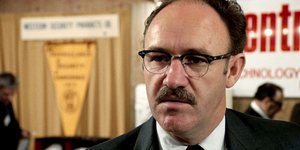
The late great Robert Duvall developed strong working relationships with many amazing filmmakers, but he had no greater collaborator than Francis Ford Coppola. Duvall earned Oscar nominations for his work in Coppola’s masterpieces in The Godfather and Apocalypse Now, and it's one of the greatest tragedies in both of their careers that he did not return to reprise his role as Tom in The Godfather: Part III. Coppola had a run of successes in the ‘70s that was unparalleled by any other director, and Duvall was instrumental in all four of them. However, Duvall’s name wasn’t included within the credits for The Conversation, an anxiety thriller that was released the same year he returned for The Godfather: Part II. Based on a mutual decision he made with Coppola, Duvall decided not to promote the fact that he was in The Conversation.
While it had been in development long before the Watergate scandal broke, The Conversation was seen as a commentary on American paranoia in the age of surveillance and government corruption. The late great Gene Hackman gave one of his best performances ever as Harry Caul, a surveillance expert who records conversations of people for his clients. Duvall has a small role as an enigmatic character known only as “The Director,” who hires Harry to record audio from a couple who are in Union Square. While it took audiences by surprise to see an actor of Duvall’s stature, especially given how famous he was in the aftermath of The Godfather, the brevity of his role in The Conversation is part of its brilliance.
Robert Duvall Nailed His Small Role in ‘The Conversation'
Although he was a true chameleon of an actor who could transform to play many different types of characters, Duvall was renowned for his ability to play figures of authority, which made him perfect for the role of a mysterious figure who would be powerful enough to employ Harry’s services. One of the most brilliant decisions that Coppola made with The Conversation is to drop right into the middle of the action without any exposition; it’s only after seeing how Harry performs his under-the-radar spycraft that his plans begin to make sense. It was for the sake of brevity that Coppola needed an actor who could feel like the main character in a different movie to play the director, as it was necessary for Harry to feel as minuscule and irrelevant as possible. The role didn’t necessarily require someone of more imposing physicality, but a person who could convey intelligence, anxiety, and danger. Although Duvall’s character seems intimidating within the first scene that he shares with Harry, later events color his actions in an entirely different light.

Francis Ford Coppola’s Most Underrated Movie Hits on All His Strengths as a Director
The intimate noir is also one of the 'Godfather' director's most grounded films.
Coppola perfectly diverted the audience’s attention because it would be expected that someone played by an actor like Duvall would return to be a major part of the film. In actuality, Harry doesn’t know that his strange employer is actually the target, and that he has been targeted for murder by the Director’s assistant, Martin Stett, who was played by a young Harrison Ford before he had his breakout in American Graffiti. Duvall’s disappearance from the story is shocking because it initially appears that the plot might revolve around him. Instead of feeling like a reclusive villain who is masking a dark secret, the Director is understood to be someone who shares the same suspicions as Harry and is very tactful about who he gives information to. It’s the ultimate tragedy that Harry’s involvement with the Director is what doomed him, and that the same shadowy conspirators have aimed to take them both down.
“The Director” Is an Important Character in ‘The Conversation’
While it made sense that Coppola would turn to a frequent collaborator for this specific part, Duvall’s performance was a challenging one because he had to not completely take over the film. The presence of a well-known face in an otherwise grim, propulsive thriller could have eroded its sense of realism, but Duvall fit perfectly within this ambiguous ethics in the world that Coppola had created. The Director is a character who is only defined by his title, yet Duvall brought enough personality to the role that it's easy to speculate about how much of the truth Harry was aware of. That such a memorable figure is cut out of the film, just as it appears he might open up, makes the nightmarish vision of the surveillance state even more terrifying than it would be if he had a dramatic death scene.
It wouldn’t be the last time that he gave a scene-stealing performance in a film in which he only had a few minutes of screen time, but Duvall’s willingness to take the role in The Conversation speaks to his humility as an actor and his ability to identify interesting projects. It’s not a showy role at all, but it allowed Duvall to be involved in what would go down in history as one of the best films of the 70s. The Conversation has only gotten better with age because of how ahead-of-its-time the film’s commentary on surveillance was, and it is certainly worth discussing as one of the best performances that Hackman ever gave. However, it was Duvall who made the most out of what could have been a thankless role and turned it into a shocking misdirection. It may not be a performance that he was technically credited for, but it's certainly one that deserves appreciation.
The Conversation is available to stream on Prime Video in the U.S.

- Release Date
- April 7, 1974
- Runtime
- 113 minutes
- Director
- Francis Ford Coppola
Cast
-

-
 John Cazale
 -
Allen Garfield
-
Frederic Forrest
- Writers
- Francis Ford Coppola








💬 No comments yet. Be the first to share your thoughts!