32 Years Later, These Are the Greatest Movies of 1994


In addition to reviewing, writing, and commentating on both new and old releases, Liam has interviewed talent such as Mark Wahlberg, Jesse Plemons, Sam Mendes, Billy Eichner, Dylan O'Brien, Luke Wilson, and B.J. Novak. Liam aims to get his spec scripts produced and currently writes short films and stage plays. He lives in Allentown, PA.
1994 is often brought up when discussing the greatest years ever for film, and for good reason. While years like 1939 and 1977 featured many releases that significantly altered the trajectory of the industry, 1994 has more rewatchable classics than nearly any other twelve-month span in the history of cinema.
1994 was a year in which awards titles also happened to be successful at the box office, and Hollywood had not become so obsessed with sequels that there wasn't room for original ideas. Between classic romantic comedies, powerful dramas, independent sensations, animated classics, and some of the coolest action films ever made, 1994 offered something for every type of cinephile; that it was before television began being taken more seriously as an artform ensured that the movie theater was the only place to be. Here are the ten greatest movie masterpieces of 1994, ranked.
10 ‘Quiz Show’ (1994)

Quiz Show was a powerful biopic that has stood the test of time for what it says about the manipulative way that media organizations operate, and how they use their power of influence to mask the truth from the public. While the scandal at the heart of the film might feel like a simple matter of entertainment regarding a game show, it indicated the way in which individuals could be targeted as scapegoats and corporations could avoid consequences.
Quiz Show was directed brilliantly by Robert Redford, who used his own political interests to make a film that reflected the timely dramas that were more common in the ‘70s. Although Redford didn’t act in the film, he drew out fantastic performances from Ralph Fiennes and John Turturro, both of whom were able to create a surprising amount of sympathy for otherwise unlikable characters.
9 ‘Ed Wood’ (1994)

Ed Wood is the best film that Tim Burton ever made because it sincerely reflects his interests in outsiders who are deemed “freaks” by society, yet ultimately find a community among those who share their passion. The titular director, played by Johnny Depp in his greatest performance ever, may have been responsible for some of the worst B-movies ever made, but he has such conviction about his craft that it's hard to not admire that resilience of someone who is able to ignore criticism.
Ed Wood earned the great Martin Landau an Academy Award for Best Supporting Actor for his performance as Bela Lugosi, the beloved Dracula actor who ended up dying before he was able to complete his performance in Wood’s most famous anti-masterpiece, Plan 9 From Outer Space. That Burton was able to show such genuine respect for these figures is why it’s never wise to doubt him.
8 ‘Fresh’ (1994)

Fresh is an understated and underrated crime thriller that explores the perspective of a child who is trapped with a rivalry between criminal gangs in New York City, and compares their conflict to a game of chess. Director Boaz Yakin made a name for himself with an inventive coming-of-age story that did not shy away from issues regarding urban violence, yet also served as a prayer for peace and an impassioned plea to save the youth of America.
Fresh is frank and at times very upsetting because of how brutal it can be, but it’s also a film with a surprising degree of heart, in no small part due to the excellent child performance by Sean Nelson. It’s no small task to ask a young actor to carry the weight of an entire film on their shoulders, especially one as complex as Fresh, but Nelson pulled it off.
7 ‘Hoop Dreams’ (1994)

Hoop Dreams was proof that documentaries could be legitimate forms of art, and not just educational films that sought only to spotlight topical issues. In his immersive study of three high school basketball players from inner-city Chicago, Steve James crafted a beautiful and surprising narrative about the burdens placed upon young people, and how sports can offer them both opportunities and disappointments.
Hoop Dreams was one of the first major documentaries to get a significant push in mainstream film culture, and became one of the biggest Oscar snubs of all-time when it failed to earn a nomination for Best Documentary. There was no bigger fan of the film than Roger Ebert, a Chicago native who had often promoted and recommended documentaries, who supported Hoop Dreams from its premiere, and would go on to name it as the best film of the ‘90s.
6 ‘Heavenly Creatures’ (1994)

Heavenly Creatures was an announcement that Peter Jackson was a filmmaker capable of more than just splatter horror, as it came as a shock that the transgressive New Zealand filmmaker behind Braindead and Meet the Feebles was capable of such a tender story of young love. Jackson and his co-writer Fran Walsh earned an Academy Award nomination for Best Adapted Screenplay, and also gave Kate Winslet one of her first breakout roles a year before she would attract more attention for her performance in Sense and Sensibility.
Heavenly Creatures showed how Jackson could create dynamic character stories within a more immersive adventure, previewing what he would later accomplish whilst making The Lord of the Rings trilogy. Heavenly Creatures was also one of the most important LGBTQ films of the ‘90s, and has emerged as a cult classic, despite not being made widely available on physical media.
5 ‘In the Mouth of Madness’ (1994)

In the Mouth of Madness was a major comeback for John Carpenter, perhaps the greatest horror director of all-time, after his disastrous experience making Memoirs of an Invisible Man with Chevy Chase. It felt fitting that Carpenter, who had already developed a massive following among horror fans, would be interested in a story about obsessive fandom and the way that infatuation with a piece of media could lead someone to lose sight of their reality.
In the Mouth of Madness was proof of Carpenter’s inventiveness, as he was able to focus on a different track of horror that didn’t feel derivative of any of his prior entries in the genre. Carpenter has made so many masterpieces that it is nearly impossible to compare them to one another in terms of quality, but In the Mouth of Madness deserves another look because it did not do particularly well upon its initial release.
4 ‘Clerks’ (1994)

Clerks is the ultimate independent film because Kevin Smith famously maxed out his own credit cards in order to make a small-scale comedy at the same convenience store that he worked at. It’s a film that is completely composed of conversations amongst co-workers about everything from dating to the Star Wars franchise, and it opened up indie cinema to an entirely new generation.
Clerks is much more artful than it is given credit for because Smith is able to say something profound about the friendships that truly matter, and how workplace culture has decimated the dreams of an entire generation. It also marked one of the most unusual franchise starters of all-time, as Clerks became the first chapter in Smith’s “View Askenwiverse,” which included the rest of his ‘90s films, as well as many of the projects he has made within recent years.
3 ‘Forrest Gump’ (1994)

Forrest Gump was the most popular, highest-grossing, and Best Picture winning film of 1994, and it has surprisingly held up pretty well. While the corniness is part of the charm in Robert Zemeckis’ seminal adaptation of the beloved novel of the same name, Forrest Gump is highly satirical of the last few decades of American history, and speculates on why certain moments have become immortalized.
Forrest Gump has a performance from Tom Hanks that is impossible to replicate; had any other actor been cast in the role, the film may have been considered to be wildly offensive or incredibly obnoxious. Hanks created a character that people continue to quote and hold up as a role model, and is both willing to be the butt of jokes whilst instilling true heart into a sincere performance. The backlash to Forrest Gump has gone so far that the film might now actually be a bit underrated.
2 ‘Pulp Fiction’ (1994)

Pulp Fiction is one of the most important films ever made and still feels like a work of genius because of its formal inventiveness and audacious content. Although Quentin Tarantino had already made a name for himself two years prior with his popular directorial debut Reservoir Dogs, Pulp Fiction channeled all of his passions into a non-linear noir black comedy that assembled one of the greatest ensemble casts of all-time and gave each of the stars the best roles of their careers.
Pulp Fiction is perhaps the most defining film of the ‘90s because of the immediate impact that it had on the way dialogue was written, scenes were constructed, and writer/directors like Tarantino essentially turned into rock stars because their involvement was more exciting than that of any singular star. It’s rare that a film is equally admired among college film geeks and the prestigious voters at the Cannes Film Festival.
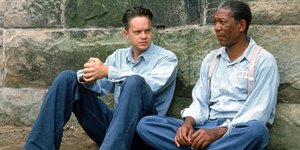
1 ‘The Shawshank Redemption’ (1994)

The Shawshank Redemption is an insurmountable classic that has only gotten better with age, even though it wasn’t initially a box office success. Adapted from a short story by Stephen King and helmed by Frank Darabount in one of the most impressive theatrical film debuts of all-time, The Shawshank Redemption conjured a genuine feeling of hope, despite the fact that it takes place in a prison.
The dynamic between Tim Robbins and Morgan Freeman is one of the greatest onscreen portrayals of friendship, as the balance between the two stars is absolutely perfect. While the magic of seeing The Shawshank Redemption and reaching its twist is something that every cinephile is only ever able to experience once, there is so much detail packed into every moment with Darabount’s classic that it has become a true “comfort film” that has taken on a new life for every subsequent generation that discovers it.

The Shawshank Redemption
- Release Date
- September 23, 1994
- Runtime
- 142 minutes
- Director
- Frank Darabont
- Writers
- Frank Darabont
Cast
-
 Andy Dufresne
 -
 Ellis Boyd 'Red' Redding








💬 No comments yet. Be the first to share your thoughts!