7 Game-Changing Western Shows That Redefined the Genre


He first began his professional writing career in 2011 writing political columns for HubPages, gradualaly building his portfolio until he was rewarded with his first paid writing position with News Headquarters in 2013. Since then, Kareem has covered everything imaginable, from writing political news columns for Examiner, reviewing the latest albums for AXS.com, and giving a unique take on sports, food, and the entertainment industry for Fansided.com. He had another online stop at Narcity, covering travel and things to do in his native Florida, before finally bringing his uniquely immense writing talent and voice to Valnet in 2020, first as a List Writer for ScreenRant before taking his talents to Collider in 2021.
During his time at Collider, Kareem has showcased his talented writing style on a number of beats, trailer previews (DOTA: Dragon's Blood) to season premiers (Abbott Elementary), to Lists ranking everything from 80s Sitcoms (which holds a special place in his heart), to classic Disney Channel shows.
When he's not working, you can catch him bing-watching classic horror movies (he's a huge fan of Friday the 13th), hitting bike trails, and playing UNO (and losing) during game nights with friends.
He calls Orlando, FL home.
The first Western to ever premiere on television wasn't a gunslinging outlaw who held up banks and stage coaches. It was a puppet. In 1949, Los Angeles TV station KNBH (now KNBC) produced The Adventures of Cyclone Malone, which followed the puppet sheriff of Yazoo Junction. It may seem a bit odd that the first Western to make a mark on the then invention was one based on a puppet, but it was, nevertheless, influential, and it showed that the genre could attract a household audience.
Within that last sentence was a word that is the basis for this piece: influential. Much like Cyclone Malone, there are certain Western shows that came on after the puppet left the air that have made their indelible mark on the genre; from revising what the West looked like, to pioneering filming in color. The following Western shows have all had an influential mark on the genre as a whole. So, without further ado, let's head to the OK Corral and dive in.
1 'Deadwood' (2004–2006)

The one aspect about the Old West that has always fascinated me was how these outposts grew into bustling towns. It's like a window into how the Western United States came to be, which is why HBO's Deadwood is not only one of my favorite Western shows, but it also had a huge influence on the genre by introducing modern audiences to how the West was formed and ran.
Premiering on the premium network in 2004, Deadwood tells the story of Deadwood, South Dakota, and how it grew from being just a camp into a town. Deadwood completely redefined what a Western show should be, introducing realism and moral ambiguity into a genre that was often defined by the good guys and the bad guys. There was nothing "safe" about Deadwood, as it shows, in raw terms, how this town changed from chaos to being a civilized society, something that more Westerns would explore long after its final episode aired in 2006.
2 'The Lone Ranger' (1949–1957)

The same year that Cyclone Malone premiered on TV screens in LA to defend Yazoo Junction, a former Texas Ranger wearing a black mask and traveling with his friend throughout the West to help out those who were helpless against the rampant lawlessness. He would go by the name The Lone Ranger, and the titular character would be very influential on the genre as a whole. As the third ever Western to premiere on television, the series was the first true bona fide ratings hit, and kicked off the Golden Age of Western television.
The legendary ABC Western presented The Lone Ranger as a moral compass — clean-cut and never had any vices. All he did was have some of the best gunplay on television, and the series helped launch the Golden Age of TV Westerns with its clever marketing and iconic quotes ("Hi-yo, Silver, away!"). Yes, the character of Tonto (Jay Silverheels) is kind of problematic today, but that shouldn't dim the massive cultural influence The Lone Ranger had on the genre.
3 'The Rifleman' (1958–1963)

The intro to this legendary series was simple but iconic. Hearing the narrator say those two magic words, followed by Lucas McCain (Chuck Connors) fire his rifle while walking slowly, you knew you were going to be in for Western gold. Premiering on ABC in 1958, The Rifleman was just as influential as The Lone Ranger, the series that would open the door for other Western shows to enter (more on this later). While the former focused on drifters who established law in the West, The Rifleman did something different, focusing on the characters and letting them drive the story instead of action-packed gunfights.
Lucas McCain wasn't just one of the best riflemen on TV — he was a single dad raising his son in the lawlessness of the Old West. While The Rifleman did have violence, the show was more character-driven than its peers at the time, and it showed that a Western didn't always have to be about who could gunsling the best. It could also be about compassion and responsibility, as well as getting justice, something that future Western TV shows (and movies) would incorporate into their own projects.
4 'Bonanza' (1959–1973)

For 14 seasons, Western fans were introduced to the world of Bonanza thanks to that iconic map being set on fire; and, for what was truly groundbreaking at the time, viewers actually got to see the color of the fire, and well as the map, and the entire show for that matter. You see, Bonanza was the first Western to ever be filmed in color, and that was iconic as we got to see the Old West in all of its glory. Before Bonanza, Westerns were filmed in black-and-white, but in Bonanza, the color was unleashed, and it looked beautiful.
But being filmed and broadcast in color wasn't the only thing that was influential about Bonanza. This was also the first Western to truly speak on social issues, taking on taboo issues at the time, such as racism, while keeping the sight of the typical American family intact. Compared to TV shows today that speak on societal issues, Bonanza was pretty tame; but we wouldn't have a series that did this kind of service if the burning map didn't do it first; and that is what you call influence.
5 'Lonesome Dove' (1989)

By the tail-end of the 1980s, it was clear that the Western genre was fading into oblivion. There were some Western TV shows and movies that were released during the '70s and '80s, but none really captured the audience like they had in their heyday in the 1940s and '50s. TV studios didn't think Westerns were a viable product anymore; but in 1989, CBS took a chance on a miniseries that not only altered the course for Westerns, but TV as a whole.
That series was Lonesome Dove, which caught everyone by surprise with its tender storyline and characters we could root for. Lonesome Dove completely revitalized the genre, showing that audiences still wanted that character-driven Western, and it paved the way for "prestige TV" and became a major influence for show creators such as Taylor Sheridan. Simply put, if Lonesome Dove didn't become a hit, we could be writing the genre's obituary right now.
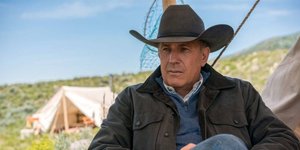
6 'Yellowstone' (2018–2024)
Most of the shows that we've discussed have largely fitted into the typical Western format, featuring lawmen and families, and telling the story of how the Old West came to be. But, in recent years, there's been a subgenre of the Western that has enjoyed massive success: the neo-Western. Those shows fit similar themes as a Western, but they're set in modern-day landscapes. No show has exemplified the perfect neo-Western more than Yellowstone.
Created by Taylor Sheridan, Yellowstone can be seen as the perfect "red state" drama, delivering on themes such as trying to preserve the traditional way of life in the face of societal change, property rights, and fighting the establishment; but make no mistake, everyone, from the conservative to the liberal, was watching Yellowstone, and with good reason. The series incorporated all the great tropes that define Western culture, while creating its own cultural zeitgeist. Yellowstone even had a real-world effect on the state of Montana, boosting tourism and people moving to the state to live the "Yellowstone lifestyle." You'd be hard-pressed to find a more influential neo-Western such as Yellowstone.
7 'Gunsmoke' (1955–1975)

Before Gunsmoke moved from radio to television in 1955, the Western genre basically centered around kids. Remember, the first Western show starred a puppet who wanted to defend Yazoo Junction from the puppet outlaws that disturbed its peace. The first bona fide hit featured a drifter who wore a black mask and rode with his friend to keep the peace in the Old West. By doing this, it kept things family-friendly without giving up the gunfights, without going into social commentary that was considered taboo at the time (and, still is in some respects). That all changed with Gunsmoke, which was a Western show that was made with adults in mind, and the series was not afraid to make that fact known.
As mentioned earlier, Gunsmoke first got its start on radio; but when The Lone Ranger became a hit for ABC, CBS knew that the Western genre would bring eyeballs to its own network. So, the show was moved from radio to TV, and not only did Gunsmoke kickoff CBS' run of good fortune with Westerns, it was a very, very influential series that had a massive effect on the genre as a whole. Gunsmoke was the first Western show that truly focused on moral ambiguity instead of the basic right versus wrong. Not only that, but the show was also the first Western to stray into social commentary, looking at such societal ills such as crime, poverty and racism. Gunsmoke wasn't a Western for kids. It was a character-driven, gritty portrayal of life in the Old West, and its influence is still seen in modern-day Western shows.


- Main Genre
- Western
- Seasons
- 20
- Creator(s)
- Charles Marquis Warren, Clyde Ware
- Streaming Service(s)
- Paramount Plus







💬 No comments yet. Be the first to share your thoughts!