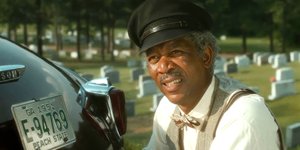
This Iconic 85% RT Drama Is Still the Most Divisive Oscar Win 37 Years Later


His accomplishments as a filmmaker include directing the indie movie Vendetta Games now playing on Tubi, the G.I. Joe fan film "The Rise of Cobra" on YouTube, and receiving numerous accolades for his dramatic short film Dismissal Time. More information can be found about André on his official website.
During the 1980s, the Academy Awards recognized both bold and more conventional films in the Best Picture category. Some years witnessed raw, morally ambiguous epics such as Platoon take home the golden statuette. Nominees that went home without the award — including Fatal Attraction and Mississippi Burning — continued to spark conversation among moviegoers for decades. At a time when American cinema was producing cutting-edge dramas that examined the darker undercurrents of the American dream, 1989’s Driving Miss Daisy emerged as one of the strangest and most controversial Best Picture winners of the era.
Bruce Beresford’s character-driven dramedy about aging and racial relations had good intentions, exploring themes of racial harmony in a culturally divided United States. Based on Alfred Uhry’s Pulitzer Prize–winning 1987 Off-Broadway play, the film earned Jessica Tandy the Academy Award for Best Actress and contributed to Morgan Freeman’s breakout year, which also included Lean on Me and Glory. The film holds a fresh 85% score on Rotten Tomatoes, and critics, including Roger Ebert praised it as “immensely subtle” and “a lesson to see a film that looks into the heart.” Despite its accolades, however, Driving Miss Daisy felt like a step backward at a moment when many audiences were seeking more urgent and confrontational storytelling about race in America.
What Is 'Driving Miss Daisy' About?
Daisy Werthan (Tandy) is an elderly Jewish widow living in 1948 Atlanta. After an embarrassing incident in which she crashes her car into her neighbor’s yard, her adult son Boolie (Dan Aykroyd) hires a Black chauffeur for her, Hoke Colburn (Freeman). Daisy initially resents the arrangement and resists Hoke’s presence, even trying to convince her son to fire him. Reluctantly, she allows Hoke to drive her around in a new car purchased by Boolie.
Over the course of 25 years, Daisy and Hoke’s relationship evolves from frosty employer-employee tension into something resembling mutual respect and affection. After the death of her longtime housekeeper (Esther Rolle), Daisy increasingly relies on Hoke beyond simple transportation. Against a backdrop of racial discrimination against African Americans and antisemitism in the South, the film spans major milestones in the Civil Rights Movement, including the bombing of a synagogue and a speech by Dr. Martin Luther King Jr., while charting Daisy’s gradual softening toward Hoke.
‘Driving Miss Daisy’ Was Too Heart-Warming for Its Subject Matter
On paper, Driving Miss Daisy suggests a dignified, character-driven exploration of prejudice giving way to empathy. The film is polished and handsomely mounted, anchored by strong performances from Tandy and Freeman. Where its central premise falters is in its sugar-coated tone when confronting entrenched racism. The narrative implies that bigotry can erode naturally through the passage of time. Yet that framing does not fully reckon with Daisy’s demeaning treatment of Hoke, even if she is portrayed as a product of the Jim Crow South.
One of the film’s most significant scenes depicts Daisy listening to Dr. King’s words and experiencing a quiet internal shift. Beresford staged the moment as an emotional breakthrough, implying that history influenced Daisy toward empathy across racial lines. However, the transformation feels dramatically compressed. Rather than dramatizing the cost and complexity of unlearning racism, the film reduces it to a personal awakening — a heartwarming change of heart. The broader social upheaval unfolding outside Daisy’s insulated world remains largely off-screen.
Spike Lee Criticized the Oscars for Awarding ‘Driving Miss Daisy'

With Beresford’s breezy tone, Hans Zimmer’s upbeat score, and the gently charming chemistry between Tandy and Freeman, Driving Miss Daisy functions as a middle-of-the-road drama-comedy reminiscent of Sidney Poitier–style racial integration pictures of the 1960s. Its approach to racial tension stands in sharp contrast to Spike Lee’s landmark film Do the Right Thing, which was notably not nominated for Best Picture that same year. The Brooklyn-born filmmaker captured the volatile realities of contemporary race relations in post–Civil Rights America with far more urgency. In a 2015 interview with The Daily Beast, Lee criticized the Academy’s decision and argued that Driving Miss Daisy had not endured in classrooms or cultural discourse the way his own film had.
"Nobody's talking about motherf****** 'Driving Miss Daisy.' That film is not being taught in film schools all across the world like 'Do the Right Thing' is. Nobody's discussing 'Driving Miss Motherf***** Daisy.'"
Subsequent prestige films such as The Help and Green Book would similarly draw criticism for softening or simplifying racism through sentimental storytelling. Like Driving Miss Daisy, these films are not necessarily flawed from an acting or technical standpoint. Tandy and Freeman inhabit their respective roles with nuance and restraint. But as a Best Picture winner, Driving Miss Daisy now feels overly nostalgic and comfortable given the social issues it raises. What once seemed gracious and humane has, for many modern viewers, come to feel timid and tonally out of step with the realities it portrays.
Driving Miss Daisy is currently streaming on Tubi in the United States.

- Release Date
- December 15, 1989
- Runtime
- 99 minutes
- Director
- Bruce Beresford
Cast
-

-

-
 Jessica Tandy
 -
Esther Rolle
- Writers
- Alfred Uhry









💬 No comments yet. Be the first to share your thoughts!