

From Hugo Weaving’s arrival to David Leitch’s secret role, the director revisits every part of the dystopian classic.
'V for Vendetta's Director Admits the Guy Fawkes Mask Escaped the Screen and Outgrew the Movie

Twenty years later, V for Vendetta still feels like one of those films that refuses to stay in the past. Directed by James McTeigue from a screenplay by The Wachowskis, and adapted from the graphic novel by Alan Moore and David Lloyd, the 2005 film starred Natalie Portman, Hugo Weaving, Stephen Rea, Stephen Fry, and John Hurt in a dystopian story that somehow keeps sounding louder every time the world gets noisier. It’s a political thriller, an anti-superhero movie, a revenge story, and a warning all at once, and that strange blend is a huge part of why it has endured.
When Collider spoke with McTeigue for the film’s 20th anniversary as part of our second Collider Rewind, the director reflected on the politics that keep circling back around, the way audiences embraced the film’s themes, why the Guy Fawkes mask became bigger than the movie itself, and how Weaving managed to make V work where James Purefoy struggled. He also shared stories about David Leitch secretly appearing under the mask, the pressure behind the domino sequence, the beauty of the film’s destruction, and why John Hurt’s Sutler now feels almost understated. Across the whole conversation, one thing became very clear: V for Vendetta did not just survive because it was stylish. It survived because it understood how power, fear, and spectacle keep repeating themselves.
Why 'V for Vendetta' Still Feels So Alarmingly Current

I rewatched the film the other night for the first time in, I think, about 10 years. I watched it with my wife, who watched it for the first time, and she did not know what to expect. I didn't tell her anything about it. The first thing she said when we finished was 'Why does that feel like real life? Take away the guy in the mask with the swords and everything, the news stuff, and it all feels so real'. Do you think that when you made it in 2006, you thought that those themes would be so timely and relevant 20 years later?
MCTEIGUE: Look, it's always hard to estimate what the life of a film is, like how the public will accept it. I think what I did know was that the graphic novel that it was adapted from was written during the Thatcherite period in the UK, and those same thoughts and fears were expressed in the graphic novel, and so they were still relevant when we went to make the film. So, it was like an adaptation of that and just bringing it into a more modern existence, I guess.
But fear used to justify stronger state power, detention or exclusion of groups as threats, controversies around surveillance and transparency, struggle over control of political narratives, conflict with the press, crisis to further executive authority. I think they’re all probably things we're dealing with at the moment.
I guess I'm saying that because I feel the politics of the film is circular and cyclical. Those things that people in the UK felt during Thatcher were the same things that we were feeling during the Bush administration, and the same things a lot of people are feeling at the moment. So, I think it goes in waves, it comes in waves. You have a period like we’re in at the moment, a period we were in around the Bush administration. So, it depends on what country you're in, actually.
I think audiences really understood what the film was trying to do.
It's an interesting point. I think it is funny how politics and the way that life does seem to be peaks and troughs in terms of edging towards fascism, and then it veers rapidly away, like, I can't believe we're doing this, and then it creeps back down to it again. When you look back at the film, is there anything that surprises you in particular about how the audiences that have watched it have continued to use it and interpret it however they see it?
MCTEIGUE: I think it's kind of the strength of the film, to tell you the truth. You really hope that when audiences watch a film, they'll get the meaning behind the film, which often doesn't happen, but people really embrace V for Vendetta and the narrative themes that it was talking about, and the characters. There's a lot to be said for the plethora of characters in there that people latch onto, because Evey, who's played by Natalie Portman, was a really good access point to the radical ideas that V had. When you're having a discussion, obviously or potentially, about the morality of terrorism, which is what you’re discussing with V for Vendetta in some ways, a personal vendetta with the view to changing society at large — it's that whole one person's terrorist is another person's freedom fighter — I think audiences really understood what the film was trying to do.
How the Guy Fawkes Mask Escaped the Movie and Entered the Real World

MCTEIGUE: Then, I think the double whammy was the mask. The mask lived on, and people really understood what the mask represented, which was there was more power in a group of people, and the mask let people protest in a way they couldn't have before. So, I think the film resonated that way. It sort of spread its tentacles out into society, and so now, just about everyone in the world knows what a Guy Fawkes mask is, right? It's an amazing thing for your film to slip into the culture like that. It’s a one-in-a-million shot sometimes.
It’s not just that people remember the mask. It’s that they recognized what it could mean for them.
We are discussing the 20 years since the film came out. That means that the film has endured. Why do you think it has endured? Do you think it's because of anything specific it predicted, or do you think it's just because the film and the story itself understood that recurring pattern of fear and the media manipulation, and the public's desire to just follow whatever is put in front of them, and then the cycle goes on and on?
MCTEIGUE: I think it is what you said at the start. I think you said it was the first time your wife had watched the movie. I think whenever you pick that movie, no matter whether it's the government system that we're in at the moment, you can look around and you can see the parallels to what's going on in your life at any given time, or if it isn't, then it's in the very recent past, and I think people responded to that. So, people get it at this primal level, and I think that the mask really helps cement it in people's imagination. I really felt when it went wide culturally, whether it was during the Arab Spring or the Wall Street protests or Scientology protests or the protests in Asia, that people understood well the power of the mask, and people understood the film was there as an allegory about where we could end up, and I think that's still relevant now. It’s not just that people remember the mask. It’s that they recognized what it could mean for them.

Nearly 21 Years Later, a Legendary Sci-Fi Comic Adaptation Begs To Be Remembered
The film's 21st anniversary is a week away.
The Tightrope Walk of Making V Both Seductive and Dangerous
You were talking about how you have that interpretation of V, if he is a terrorist, if he is a freedom fighter, and how we're asked to interpret him. The viewers of the film have to give their emotional investment into him because he's charismatic, and he's poetic, and he's fun, but obviously he's extremely violent, he’s extremely dangerous. He's a killer. As the director, how do you navigate the line between mythologizing him and preserving the idea that this is still a really bad guy?
MCTEIGUE: The film, at its core, is about the tension between authority and individual liberty, and you can't preach to the audience. You have to present it almost like facts. Like, Here's what this guy does. Here's the other side of what is happening, because this guy is doing it. You present that his vendetta is shaped because of the things that happened to him, and does that justify what he does after that? And I think for the most part, people go, 'No, he's a murderous villain.' But he has this greater overarching idea of how society and government could be.
So you either accept what he's trying to do, which is this way of anarchy to get what he wants, or what the film gives you at the end is maybe it's better than having a personal vendetta, it's better to try and do it through the will of the people, which is ultimately what the political system is set up for. I think that's what you try to do. I feel like the film, also, is, even though it’s a graphic novel adaptation, we approached its themes seriously. We wanted it to be like a discussion on what political regimes do, and I think people embraced it.
When you were shaping the film, what was one of the most essential aspects to preserve from the graphic novel itself? Was it the political philosophy of it, or was it the emotional arc, or just the unease generally that the story generated?
MCTEIGUE: I think it's all the things you said, actually. What you're ultimately trying to do when you do any adaptation of a book is capture the essence and the authenticity of what the book is about. The great thing about what Alan Moore did with David Lloyd is that they weave together the politics, they weave in philosophy, they weave in all of these disparate elements that go to make up this graphic novel, which was quite different at the time. It was literally groundbreaking. So all the discussions that they were trying to have about the state, about political anarchy, the tone, trying to make it a political thriller, leaning into the atmosphere and the architecture of the alternate near-future of Britain, all those things we tried to bring into the film.
'V for Vendetta's Director Explains Why Natalie Portman Was the Right Evey

On the on-camera side of things, obviously, the casting is one of the really strong points of the film. What made Natalie Portman the right choice for Evey for you?
MCTEIGUE: I had a relationship with Natalie in my former life as an assistant director. I did a Star Wars film, so I knew Natalie from that. From speaking with her, she's obviously a great actress, but she really had a grasp of the material. She really loved the material. She's super bright, really well-read, so she seemed like a really great choice for the film.
The other actors, like Stephen Rea, Stephen Fry, John Hurt, all those actors, came from my love of UK cinema. Growing up in Australia, you got this great cultural hybrid of American cinema and UK cinema, and so all those actors were on my radar. When I had a chance to cast anyone I would like at the time, I went for those guys. All the extraordinary actors, all with great careers in the UK film industry.
It was a joy to cast that movie, actually. I did it with Lucinda Syson, who I still work with today, and I think a lot of those actors really were surprised that we were going to actually get the film made. They're like, Wow, is Warner Bros. really going to make this movie? And we're like, Yeah, they're into it. Because it was a great piece of writing. The Wachowskis’ adaptation, if you just looked at it as a screenplay, you could see the ambition. You could see how the intimacy was balanced with the spectacle, and I really felt like they just looked at it, and went, 'Okay, this could be a really good film.' It slipped under the wire politically, which was kind of good at the time. And also we were coming off the back of The Matrix movies, so I think they were inclined to let us go off and make something.
Why Being Set in London May Have Helped the Film Get Made

Do you think that the reason why the film, like you said, slipped under the radar was because it was set in London with a primarily British cast, and the idea that it's the British state media? It talks about America, but off in the distance. Do you think that's maybe why it didn't set off the alarm bells as much? Because I don't think it would work as well if it were, say, a New York film set. I think it would end up being something more akin to The Running Man, if that were the case.
MCTEIGUE: Yeah, right. I think that's an astute point. I think you're right. It was seen as an adaptation of a graphic novel about a place that wasn't America. You're right in that. And I think Warner Bros. was game to make it because, probably, quite frankly, they saw there would be money in that. I mean, that's usually why you get to make a film, right?
But it sort of harkens back to political thrillers of the ‘70s, which Warner Bros. had a great run of doing. And I think at the time, the studio heads, Alan Horn and Jeff Robinov, had great success at the time with a lot of different films, and they were game to make it. And Joel Silver really helped, the producer. He really helped shepherd it through the studio system at the time. So, really, kudos to them, actually, for making the film.
Hugo Weaving, James Purefoy, and the Challenge of Acting Behind the Mask

Back on the subject of the cast, obviously, we've got Hugo in the lead role under the mask, but Hugo came on to the film after it started, as I recall. What is the process like, especially if you're directing two different people? I'm assuming that scenes that were shot prior to his arrival were still used because of the mask aspect of things. How much of a challenge is it technically as a director to direct an actor who's under a mask and get a performance out of them, and was there a difference in the style of doing that between the two actors?
MCTEIGUE: There are a few other people underneath the mask, too, actually, like Dave Leitch, who has great success with Bullet Train and Hobbs & Shaw. Right? He's under the mask at one point, he and Chad Stahelski, who's the John Wick director. They were the stunt coordinators on that movie, so Dave was under the mask for a bit of it.
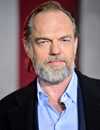
In answer to your question, it depends on how much you embrace being under the mask. Hugo, who was a friend who I knew from The Matrix, who I knew from the Australian film industry, when he came on to the film, he was like, 'This is the greatest thing ever.' He was like, This is amazing. He'd done mask work when he was at drama school. He'd also done some theater has that tradition in it. And yes, he came on late, but the first thing I ever did with him was when Evey gets released from the prison.
She's had her awakening, and she comes out, and she realizes that she's been in the Shadow Gallery the whole time. That was the first thing that Hugo did. When he acted that scene, I’m like, Oh my god, this guy just saved me. He loved being in it. He had all the gesticulation I needed. He had the voice that I needed, even though you couldn't mic the mask, so I had to do the performance all over again in looping or ADR. But he was amazing. He was amazing in it.
And James Purefoy, who was the other guy in it, was more troubled by the mask. He's a great actor, but also, you're taking away someone's tool, their face, that they've been using for 40 years, and so that's hard to do, but Hugo was into it.

Guy Ritchie's Hit Crime Saga Surges Again as Season 2 Looms
The bingeworthy drama doesn't stay down for long.
This is Where You Can Actually Spot David Leitch as V

Is there any particular action scene where I could spot David Leitch as V? Any action scenes at all that you can recall?
MCTEIGUE: Yeah, in the alleyway where Evey first meets the Fingermen. That's Dave doing the stunt stuff. Also, in the underground tube station at the end, where V throws all the knives. That’s Dave.
I'm gonna have to do a rewatch tonight and be like, Ah! Now I know the secret.
MCTEIGUE: Yeah, those guys, Chad and Dave, were the stunt coordinators on that. And then the next movie I did was Ninja Assassin, and they were the second unit directors on that, and that was the first time they'd done both of those things. So, I'm glad they've gone on to very successful careers, those two.
The Houses of Parliament, the 1812 Overture, and the Beauty of Destruction

Absolutely. One of the things I love about the film is the way it stages its destruction beautifully with the operatic music, the 1812 Overture. The Houses of Parliament getting destroyed is just one of the most stunning scenes I can recall. Was that necessary for you to do, as well, in order to show us through these eyes that what he's doing is for a better world, essentially, because he's making these destructions look as beautiful as they are?
MCTEIGUE: I think that it's more of the cinematic flourish than it is V. If the question is, does V know what it's going to look like? I think maybe, maybe not. Ultimately, those explosions that blow out the Houses of Parliament and blow out Big Ben, that's meant to be the train that goes underneath the Houses of Parliament. I think that there's a discussion in the film about whether the buildings have meaning, and V goes on to say, No, really, it's the people who give the meaning to buildings. But he believes that he can destroy these great symbols of power and authority, and it can mean something, and if people witness to that destruction, maybe they get the underlying thought in there. Why are these buildings being destroyed?
There's a beauty in performativity, which is what V gets into.
Why Performance Itself Becomes a Form of Resistance

V’s entire strategy itself is theatrical — the costuming, the language, and the music, and all that sort of stuff. Is his performance part of his own resistance? People performing as their form of resistance, the theatricality like Deitrich, with his satire show ending up getting him killed, is it showing that performance and not complying is the most dangerous way you can approach fascism?
MCTEIGUE: I think there's a beauty in a disguise. There's a beauty in performativity, which is what V gets into. He embraces the ethos of the original Guy Fawkes, and he's tailored himself as a representation of Guy Fawkes. So, yeah, in answer to your question, yes, there is some drama to be had in presenting yourself in a costume. In Deitrich’s way, it's a parody. I guess his costume is parody, and V’s costume is deadly in a way.
The Domino Scene Took Days — and David Leitch Had the Most Stressful Job on Set
.jpeg?q=49&fit=crop&w=500&dpr=2)
Absolutely. One thing about V’s theatricality that I had to ask was, is there an unofficial note anywhere about how long he spent building those dominoes before he knocked them down? It must've taken forever.
MCTEIGUE: [Laughs] Oh, it did it. Well, I remember it was some Belgian guys who came in and did it. We scoured around, and it took them a couple of days. Then we had this very nervous moment where you set up the cameras, and one is a dolly shot, and literally, if you tip it… Actually, that's a funny story about Dave. He was the guy behind the mask who had to flick the domino. I've never seen him sweat so much in his life because one bad flick, and it would have, you know.
So anyway, they set it up. We got all the cameras ready. Dave was sitting there on the floor. He flicked the domino and, off it went. It went amazing, though. Those guys were incredible. And then in the end, just for the final dominoes coming together, there’s a tighter shot; we filmed that as a separate setup.
He's like a tame baby compared to where we are at the moment.
Why John Hurt Was Always the Right Choice for Sutler

Actually, I wanted to go back quickly to the casting aspect and having John Hurt in the film, because obviously that has a meta layer for people who are more aware of dystopia in general. When he was cast in the film, was that something you were aiming for? Was it a case of 'We should try to get John Hurt for this'?
MCTEIGUE: Yeah, we actively went after John Hurt. I was aware of Winston in 1984, and he's a phenomenal actor with a phenomenal career. He embraced it. As you can see, I tried to make Sutler, his character, as outlandish as possible. But even now, if I wrote about how politics is now, the performative part of politics now, and you put that in a script back then, people would go, 'That's ridiculous! No one would ever do that or say that or be that.'
But at the time, I was trying to make him part of that long lineage of these cartoonish characters that change countries. Like, if you watch speeches by Adolf Hitler, right? You just go, Wow, how did a whole nation of people follow this guy? Like some of those rallies. Mussolini, right? There's a long history of these cartoonish characters that come to power that people follow, and so I tried to give a bit of that to Sutler, but he's nowhere near where we are at the moment. He's like a tame baby compared to where we are at the moment.
'V for Vendetta's Director Reveals What Would Change About the Film Now
Obviously, now you've got 20 years of hindsight, and without rewriting history, you can take the 20 years that followed into account. Is there anything that you would have filmed differently with the knowledge of the future? Would you have changed anything at all about the film?
MCTEIGUE: I don't think so. I feel like you make the best film that you can at any given time, and I feel like V has become timeless because it didn't try to lean too much into the politics of the day. It tried to give you this overview of political systems and people that exist in them, and individual freedoms that always exist within those political systems, but wrapped up in an anti-superhero movie. I don't think I would have changed anything just because the parallels are there, and they'll be there in 40 years, and they'll be there in 60 years. I don't know, would I change Sutler a bit? Yeah, probably. [Laughs] I might turn the volume up to 11 on that instead of 10, like I did.
V for Vendetta is streaming now on Prime Video.

- Release Date
- February 23, 2006
- Runtime
- 132 minutes
- Director
- James McTeigue
- Writers
- Lana Wachowski, Lilly Wachowski
- Producers
- Grant Hill, Joel Silver, Lana Wachowski, Lilly Wachowski, Lorne Orleans
Cast
-
 V / William Rookwood
 -
 Evey
Evey




💬 No comments yet. Be the first to share your thoughts!